How to Ship Cars from China: The Complete China Car Export Logistics Guide
A practical, end-to-end guide to china car export logistics: how to ship cars from China by Ro-Ro or container, key vehicle export ports, required shipping documents, and what it really costs.
China is now one of the world's largest exporters of both brand-new and lightly used vehicles, and the freight industry behind this trade has grown just as fast. If you are a dealer, a rental fleet operator, or an overseas buyer, understanding china car export logistics is the first step to moving vehicles on time and on budget. This guide covers the shipping options, key ports, paperwork, costs, and destination markets you need to know.
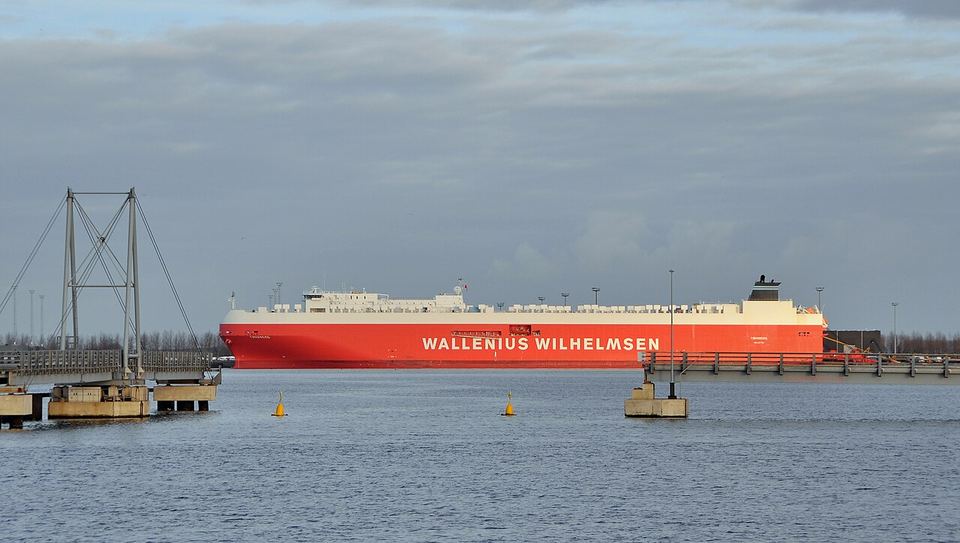
Image: "Tønsberg R01" by Marc Ryckaert — CC BY 3.0, via Wikimedia Commons. Source: https://commons.wikimedia.org/wiki/File:MV_T%C3%B8nsberg_R01.jpg
How to Ship Cars from China: Ro-Ro vs. Container
The most important decision in china car export logistics is choosing the shipping method.
Ro-Ro (roll-on/roll-off). Dedicated car carriers drive vehicles straight up the ramp and lash them on multi-level decks. Ro-Ro is the fastest and most economical way to move large numbers of vehicles, and it is gentler on the car because there is no crane handling involved. Most established car brands and most high-volume exporters use this route. The main trade-off is availability: ro-ro schedules depend on the car carrier lines serving your destination, so departures can be less frequent than container sailings.
Container shipping. If you need to ship just a few vehicles, or if no ro-ro berth is available to your port, a 40-foot container is a flexible alternative. As a rule of thumb, a standard 40-foot container can hold 3 to 4 sedans. The cars are driven in, chocked, and lashed, and the remaining space can be packed with spare parts or accessories if weight and volume limits allow. Containers are also ideal when your vehicles are bound for inland destinations, because the box can continue by truck or rail after it is discharged. Expect a higher per-unit cost than ro-ro for large volumes, but far better availability and routing flexibility when you ship cars from china in small batches.
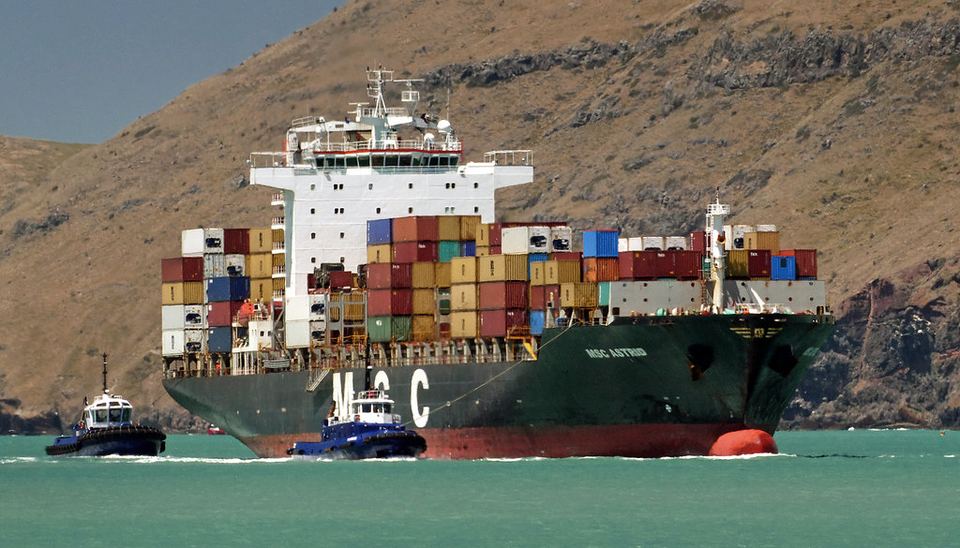
Image: Container ship at sea — CC0, via Openverse. Source: https://api.openverse.org/v1/images/11b8f29c-98f2-4241-9e98-345d1a22f39f/
Key Ports for China Car Export Logistics
Almost all vehicle exports leave China through a handful of specialised vehicle ports. Shanghai has the largest ro-ro capacity and some of the busiest schedules to Europe and Southeast Asia. Guangzhou is home to a dedicated vehicle wharf that handles very large volumes of finished cars. Dalian in the north serves Korea, Japan, and Russia-bound routes, while Tianjin is an important gateway for northern China. These ports offer bonded vehicle yards, customs inspection lanes, and ro-ro berths built specifically for car handling, which shortens loading time and reduces the risk of damage. Picking the origin port closest to where your vehicles are packed is not always the priority — often the better move is to route your cargo through the port with the most frequent sailings so that total transit time to your market is shorter.

Image: "Guangzhou International Port & Shipping Center and Yuzhu Vehicle Wharf" — CC BY-SA 4.0, via Wikimedia Commons. Source: https://commons.wikimedia.org/wiki/File:Guangzhou_International_Port_%26_Shipping_Center_and_Yuzhu_Vehicle_Wharf_20211105-01.jpg
Documents and Costs: What It Takes to Ship Cars from China
Every vehicle shipment depends on correct paperwork. The key documents for china car export logistics are the commercial invoice, the packing list, the bill of lading, and the certificate of origin. Used vehicles may also need a pre-shipment inspection certificate and, for some destinations, an age or emissions compliance document. Get the classification right: cars fall under HS code 8703 (motor cars), and a wrong HS code is one of the most common causes of customs delays and unexpected duties.
On cost, the biggest line items are ocean freight, port terminal charges at both ends, lashing and securing, and insurance. Ro-ro freight is usually quoted per cubic metre or per lane metre, while container freight is quoted per container. For a single used car, origin and destination fees can be a significant share of the total — which is why working with a forwarder who consolidates many vehicles lowers the per-car price. Insurance is recommended for every shipment and is typically charged as a small percentage of the cargo value.
Where Chinese Car Exports Are Heading
The strongest demand today is coming from the Middle East, where large volumes of new and used vehicles arrive through the ports of Jebel Ali, Dammam, and Jeddah; Africa, which has an insatiable appetite for affordable used cars via Mombasa, Lagos, and Dar es Salaam; and Australia, which attracts both ro-ro and container volumes. Southeast Asia is also growing quickly, supported by free trade agreements that cut import duties on vehicles from China.
No matter which market you are targeting, the same rule applies: plan the logistics early and book space ahead of peak seasons, when ro-ro berths sell out weeks in advance.
Ready to plan your car shipment? Whether you need a single car in a container or a full ro-ro load of sedans and SUVs, we handle every stage of china car export logistics — booking, loading supervision, lashing, customs clearance, and delivery coordination at the destination. Find out more about our services at www.globalfreight-cn.com, and let us recommend the best route and a competitive rate for your shipment.
Need to ship goods from China? We're a China-based freight forwarder focused on export logistics — ocean, air and rail freight from Chinese ports to destinations worldwide. Let's talk about the best route for your cargo.
Or chat with us right now — tap the green WhatsApp bubble at the bottom right corner of this page.
WhatsApp: +86 150 1170 4169
Related reading
- Rail freight from China to Europe — transit times, terminals and what the rate covers
- How to calculate shipping costs from China — the formula behind every quote
- Shipping from China to Europe — sea vs rail vs air compared
Need a number for your own cargo? Send us the route, the volume and the destination and we reply within one business day.