China Excavator Exports: A Complete Guide for Buyers (2026)
China exported over USD 8.2 billion of excavators in the latest full-year official data. Learn about Chinese excavator brands, top destination markets, FOB shipping, RORO vs container transport, customs and documentation, and how GlobalFreight handles your excavator and parts logistics end to end.
Chinese excavators and construction machinery are now exported to more than 200 countries and regions. Understanding the market, the machines, and the logistics is the key to a smooth import deal.
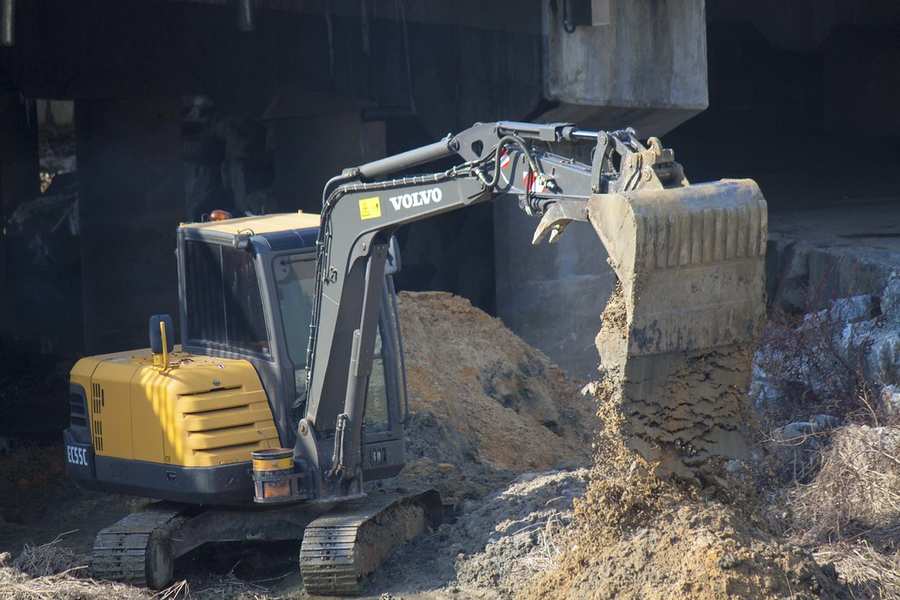
Image: "Excavators Construction Machine Site" - CC0, via Flickr (Openverse). Source: https://www.flickr.com/photos/137346712@N07/25066497109
1. The Rise of Chinese Excavator Exports
For the past decade, China has grown from a domestic construction-equipment powerhouse into the world's largest exporter of excavators. Annual overseas shipments crossed the 100,000-unit mark and the export value reached USD 8.22 billion in the latest full-year official data, with a trade surplus of roughly USD 8.01 billion. Even after two years of mild correction (2023-2024), the industry has clearly bottomed out: since August of the latest full year monthly exports have returned to positive growth, with December of the latest full year up +21.4% in value and +10.8% in volume year on year.
Behind the headline numbers, the structural story is even stronger:
- Whole-machine exports of China's construction machinery hit USD 38.3 billion in the latest full-year official data (+12.1% YoY).
- Parts and components exports reached USD 14.6 billion, roughly 27.5% of the sector's total exports.
- Total construction-machinery exports surpassed USD 50 billion for the first time in the latest full-year official data (+8.8%).
In other words, it is not just complete excavators that are shipping out of China - the entire aftermarket ecosystem (tracks, buckets, teeth, hydraulic parts, engine parts) has gone global with them.
2. Key Numbers at a Glance
| Indicator | Latest Full-Year Figure | Change |
|---|---|---|
| Excavator export value | USD 8.22 billion | -1.0% |
| Excavator export volume | ~100,588 units | -4.24% |
| Excavator trade surplus | USD 8.01 billion | - |
| Construction machinery exports | USD 52.9 billion | +8.8% (first time above 50bn) |
| Parts & components exports | USD 14.6 billion | +1.1% |
| "Belt & Road" share of excavator exports | 72.7% | +4.3 pts |
| Africa export growth | USD 1.51 billion | +66.6% |
Data compiled from China Association of Construction Machinery (CCMA), China Chamber of Commerce for Import & Export of Machinery & Electronic Products (CCCME), and China Customs statistics.
3. What Chinese Excavators Offer Buyers
Competitive pricing with modern specs
Chinese brands - Sany, XCMG, Zoomlion, LiuGong, SDLG, and many others - deliver reliable machines at 20-40% lower price points than legacy Western and Japanese brands, with comparable emissions (EU Stage V / EPA Tier 4 options) and telematics features.
A complete ecosystem
Beyond complete units, China is the world's largest supplier of excavator parts and wear items:
- Undercarriage parts - track chains, rollers, idlers, sprockets, track shoes
- Bucket & ground-engaging tools - buckets, teeth, adapters, cutting edges
- Hydraulic components - pumps, motors, main control valves, cylinders, hoses
- Engine parts - filters, injectors, turbochargers, cylinder kits, radiators
- Electrical & cab parts - sensors, wiring harnesses, joysticks, dashboards
Because domestic output is so large, parts are available for all major brands (Chinese and international), with short production lead times and warehouse-level availability in hubs such as Xuzhou, Changsha, Jinan, and Guangzhou.
New + used + brand-agnostic
Buyers can source new units, low-hour used units, complete knock-down (CKD) kits, or aftermarket parts - depending on their budget and local market.
4. Top Destination Markets
Chinese excavators and parts now reach virtually every market, with the most dynamic demand in Asia, Africa, the Middle East, and Latin America:
| Rank | Market | Notes |
|---|---|---|
| 1 | Indonesia | #1 destination (+30% YoY), driven by mining and "Belt & Road" infrastructure |
| 2 | Russia | Large but softened in 2024 due to credit costs and construction slowdown |
| 3 | Belgium | Key EU gateway, now China's top entry point into Europe |
| 4-6 | USA, Saudi Arabia, Philippines | Steady recovery in demand |
| 7-10 | Ghana, Brazil, Turkey, Vietnam | Rapidly growing project-driven markets |
- "Belt & Road" countries account for 72.7% of China's excavator exports.
- Africa grew +66.6% in the latest full-year official data - the fastest-growing region.
- RCEP partners (ASEAN + Korea + Australia + NZ) were up +40.4%.
For parts specifically, Africa, Southeast Asia, and the Middle East are the fastest-growing aftermarket regions, because their fleets are young but local service networks are still maturing - a sweet spot for reliable, low-cost spares.
5. FOB & Logistics Essentials
Shipping an excavator or a container of parts is very different from shipping general cargo. Here are the points that matter most.
Complete excavators
- Mode of transport: Heavy and over-dimensional units typically move via RORO (roll-on/roll-off), breakbulk, or flat-rack / open-top containers. Small mini-excavators (under 8 t) can fit in standard 40' open-top or flat-rack containers.
- FOB terms (from China): The seller's responsibility ends once goods are loaded on board at the Chinese port. The buyer controls ocean freight, insurance, and destination charges - which is why choosing a reliable freight partner matters.
- Weight & dimension planning: Confirm actual machine weight, length, width, and height before booking; over-height or over-width cargo triggers additional charges and special handling at both origin and destination.
- Fuel & fluids: Drain fuel, oil, and hydraulic fluids before shipping; batteries may need disconnection or removal depending on destination rules.
- Lashing & securing: Proper blocking and bracing is mandatory to avoid damage and liability disputes.
Parts & accessories
- Containerized: Most parts (tracks, buckets, filters, hydraulics) ship easily in 20' or 40' containers.
- Combine LCL / FCL: If you buy from multiple suppliers, a consolidator (LCL) can group shipments at origin; for high-volume orders, a full container load (FCL) reduces per-unit cost and transit risk.
- Protection: Rust prevention (VCI packaging, greasing, oil treatment) is critical for iron and steel components on long sea voyages.
6. Customs & Documentation
Getting the paperwork right avoids delays, demurrage, and unexpected duties:
- Key documents: Commercial invoice, packing list, bill of lading (or air waybill), certificate of origin (China CO / Form E for ASEAN), and in some cases a CE or destination-specific certificate of conformity.
- HS codes & duties: Excavators (HS 8429) and parts (HS 8431 / 4016 / 8708 categories) attract different duty rates per country. Confirm classification with your customs broker before shipping - misclassification is a common and costly mistake.
- Used equipment: Many countries impose stricter rules on used excavators (age limits, emission certificates, pre-shipment inspection). Verify these before committing.
- Tax / VAT planning: Understand import VAT and possible duty exemptions under FTA agreements (e.g., China-ASEAN, China-Australia FTA) to optimise landed cost.
7. Why Partner with a China FOB Freight Forwarder
A specialised forwarder closes the gap between "bought in China" and "delivered at my site":
- Origin control: Booking, stuffing, lashing, and documentation handled at Chinese ports (Shenzhen, Shanghai, Qingdao, Guangzhou, Ningbo).
- Best routing: RORO vs. container vs. breakbulk - we recommend the most cost-effective option for your machine's size and your destination port.
- Customs & compliance: HS classification, duty and tax estimation, and documentation checks before sailing.
- End-to-end visibility: Tracking from our warehouse to your doorstep, with proactive alerts on delays or port congestion.
Ready to Import Chinese Excavators or Parts?
Whether you need one mini-excavator, a full fleet, or a steady supply of undercarriage and hydraulic parts, we handle the entire China export FOB chain - from the factory gate in Changsha, Xuzhou, or Guangzhou to your project site anywhere in the world.
Or chat with us right now - tap the green WhatsApp bubble at the bottom right corner of this page, or click the button below:
GlobalFreight (globalfreight-cn.com) - China FOB freight forwarder for ocean, air and rail freight to 200+ countries. Business email: estherhuang001@gmail.com. WhatsApp: +86 150 1170 4169.
FAQ
Q: Can I import excavators from China in small quantities?
Yes. You can import a single unit or a small number of machines. Mini-excavators under 8 t ship easily in a 40' flat-rack or open-top container, while larger units move by RORO or breakbulk. A freight forwarder can consolidate your shipment even for one machine.
Q: How much does it cost to ship an excavator from China?
Costs depend on the machine size, weight, destination port, and shipping mode (RORO vs. container). A typical mini-excavator in a container costs much less than a large 20 t unit shipped breakbulk. Request a quote with your machine's dimensions and weight to get an accurate price including port and documentation fees.
Q: What is the difference between FOB and DDP when buying excavators?
Under FOB, the seller's responsibility ends once cargo is loaded on board in China, and you control ocean freight, insurance, and destination charges. Under DDP, the forwarder handles everything including import duties and final delivery - one all-in price, ideal for first-time importers.
Q: Are used excavators allowed to be imported?
Many countries allow used excavators but impose stricter rules such as age limits, emission certificates, and pre-shipment inspection. Always verify your destination country's regulations before committing to a purchase.
Q: What documents do I need to import an excavator from China?
You typically need a commercial invoice, packing list, bill of lading or air waybill, and certificate of origin (China CO or Form E). Depending on your country, a CE or conformity certificate may also be required. Your freight forwarder can help you prepare and check all documentation.
Q: How long does it take to ship an excavator from China?
Ocean transit from major Chinese ports (Shanghai, Qingdao, Shenzhen, Guangzhou) usually takes 15-40 days depending on the destination. Add 3-7 days for booking, stuffing, lashing and export customs clearance at origin.
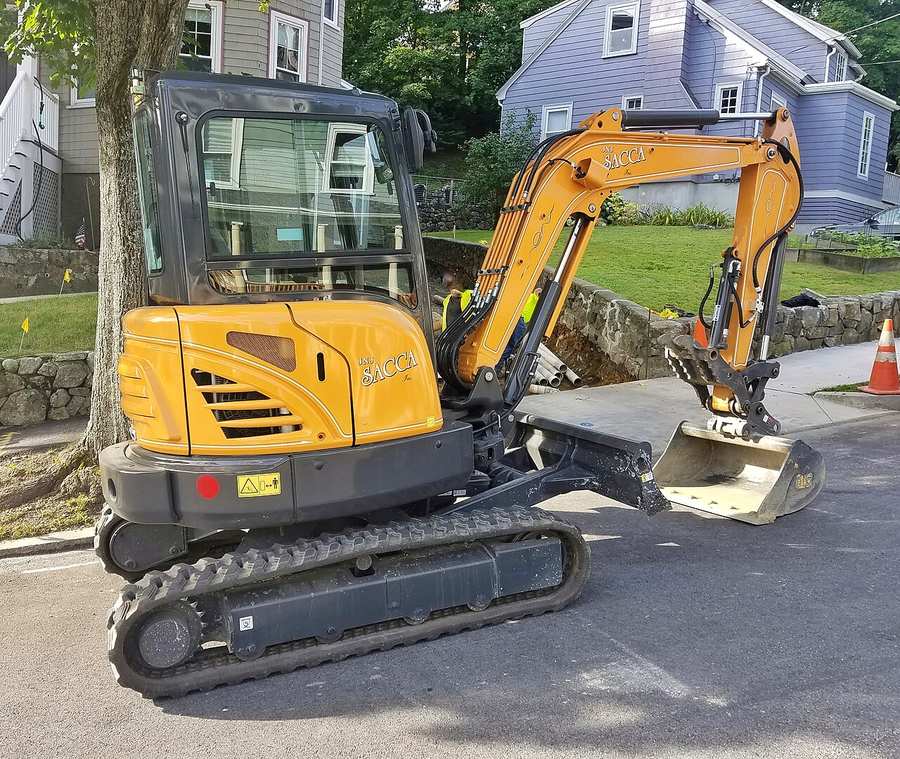
Image: "Case mini excavator - Arlington, MA" by Daderot - CC0, via Wikimedia Commons. Source: https://commons.wikimedia.org/wiki/File:Case_mini_excavator_-_Arlington,_MA.jpg
This article is for general information only. Export data reflect public industry statistics (CCMA / CCCME / China Customs); verify current figures and destination regulations with your broker before shipping.
Related reading
- Rail freight from China to Europe — transit times, terminals and what the rate covers
- How to calculate shipping costs from China — the formula behind every quote
- Shipping from China to Europe — sea vs rail vs air compared
Need a number for your own cargo? Send us the route, the volume and the destination and we reply within one business day.