How to Ship by Rail from China: China-Europe Railway Freight Explained
Rail freight from China explained: China-Europe railway routes, transit times and costs vs ocean and air, and when rail shipping is your best choice.
Rail freight from China sits between ocean and air in both cost and speed, and for many importers it is the smartest option they have never tried. A train leaving a Chinese inland city can reach central Europe in about half the time of a sea shipment, at a fraction of the price of air freight. This guide explains how rail freight from China works, which routes the China-Europe railway uses, what it costs, and how to decide whether rail is right for your cargo.
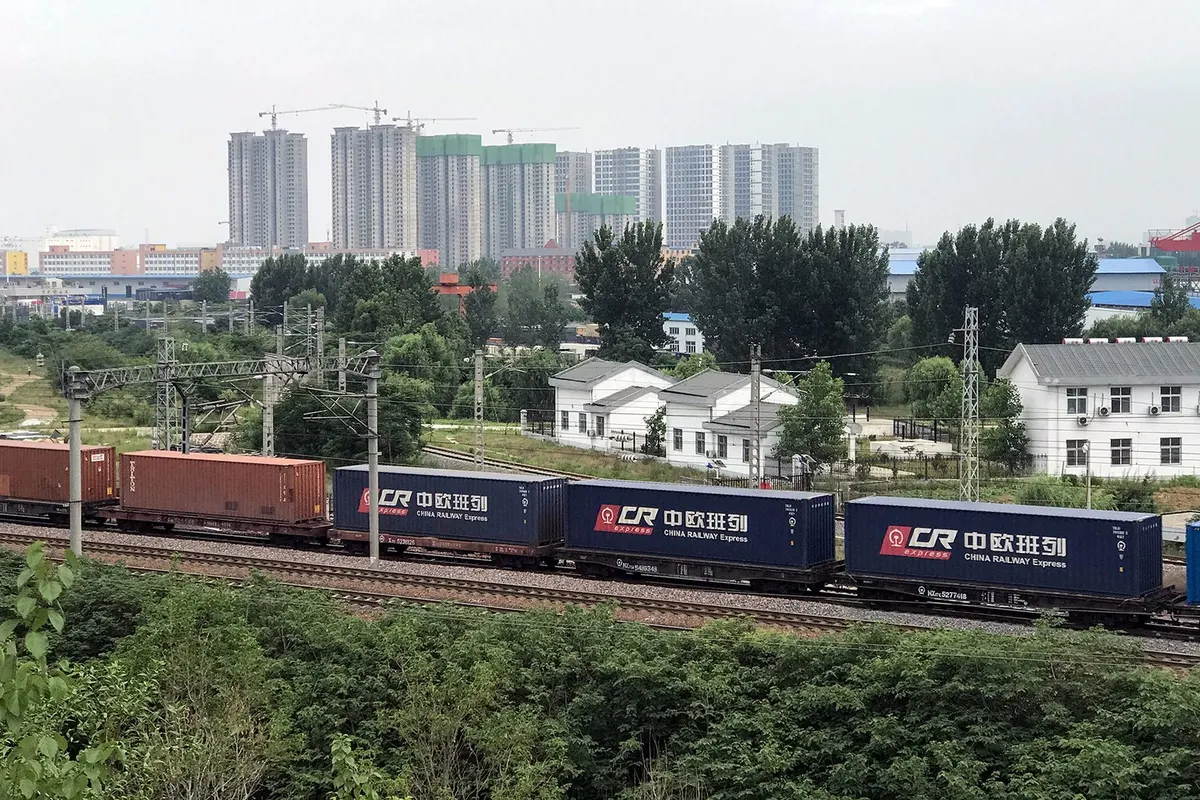
How Rail Freight from China Works
Shipping by rail from China follows a clear process. Your goods are trucked to a railway container yard in cities such as Chongqing, Chengdu, Xi'an, Zhengzhou or Yiwu, where the freight forwarder arranges export customs clearance, books the container on a scheduled block train, and issues the railway bill of lading. The train then crosses the Chinese border at Alashankou, Khorgos or Manzhouli, where the bogies are changed for the wider tracks of Kazakhstan and the CIS network, and continues west through Central Asia to Europe.
One of the biggest advantages of rail freight from China is that it is a scheduled service, not a spot departure. Block trains leave on fixed weekly departures, so you can plan production and delivery dates with confidence. The cargo stays sealed inside a standard 40-foot container from origin to destination, which means less handling and a lower damage risk than consolidated sea or air shipments.
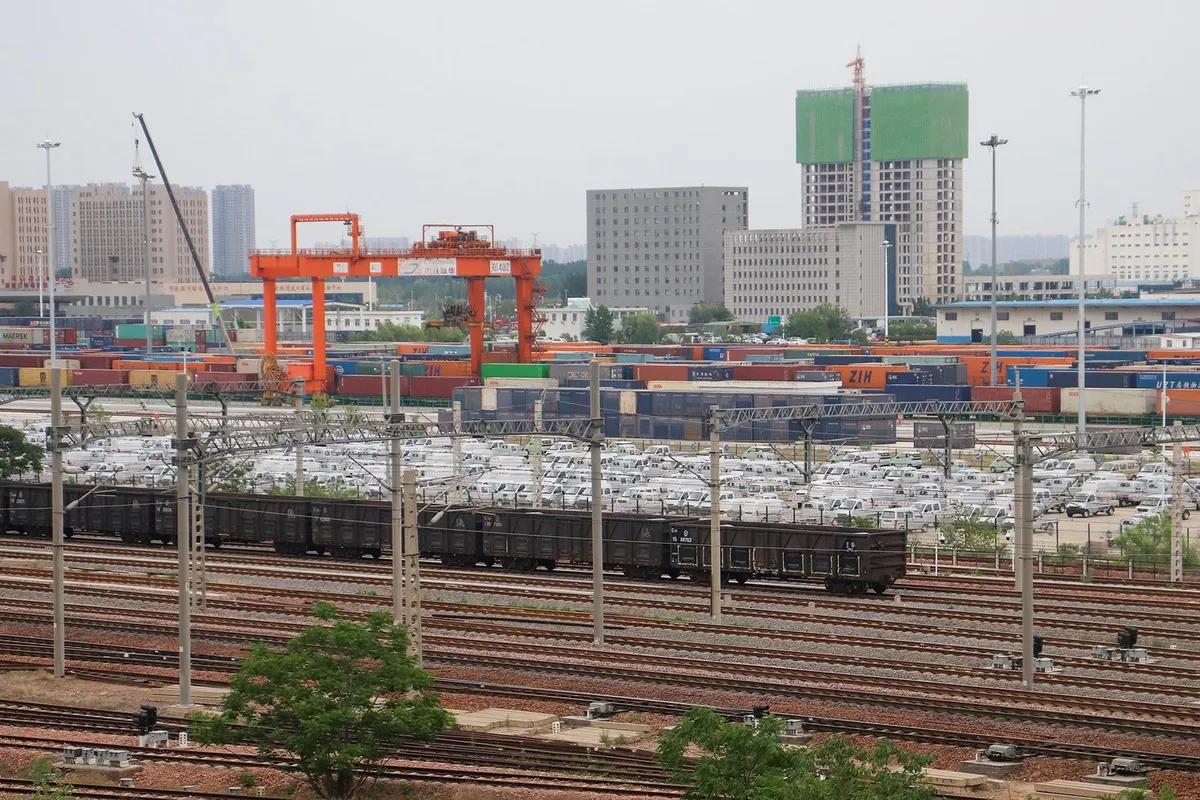
China-Europe Railway: Main Routes and Transit Time
The China-Europe railway has three main corridors. The western corridor leaves China through Alashankou or Khorgos, crosses Kazakhstan, Russia and Belarus, and arrives at hubs such as Duisburg, Hamburg, Malaszewicze or Warsaw; it is the busiest route and carries most rail freight from China to Europe. The middle corridor runs through Khorgos to Central Asia and on to Turkey or the Caucasus, while the eastern corridor crosses Manzhouli into Russia and serves Moscow and northern Europe.
Typical transit time for rail freight from China to western Europe is 12 to 20 days door to door, depending on the origin city, border congestion and the final destination. Compare that with 30 to 40 days by sea or 3 to 7 days by air, and rail becomes a genuinely attractive middle lane. Winter is slower than summer on the northern routes, and peak season between September and December can add a few days at the borders, so it pays to build buffer time into your plan.
Rail Freight Cost vs Ocean and Air
The cost of rail freight from China usually lands between ocean and air, and for many cargo profiles the gap is striking. As a rough guide, rail is roughly three to five times the price of ocean freight but only one third to one fifth of the price of air freight. That means cargo worth between about 15 and 40 US dollars per kilogram often makes sense by rail, while cheaper bulk cargo stays on the water and urgent, high-value items fly.
Your final rate depends on the origin and destination pair, the season, the container type, and whether you ship full container load or use a rail consolidation service for smaller volumes. Inland Chinese origins are a particular strength of the railway: because the train starts deep inside the country, rail freight from China avoids the extra trucking leg to a coastal port that ocean shipping requires. When you compare quotes, always ask whether the price includes pickup, export customs, terminal handling and any border fees, so the rail cost you see is the cost you pay.
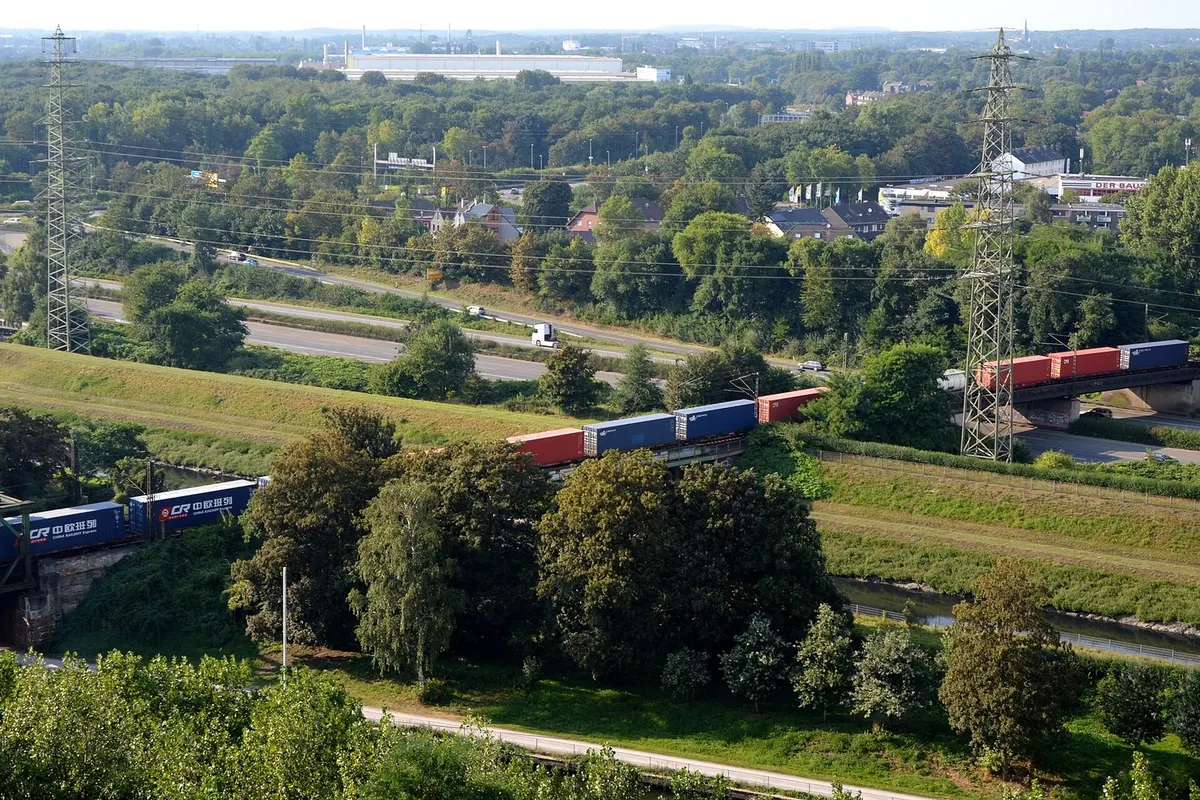
Is Rail Freight from China Right for Your Cargo?
Rail freight from China suits goods that are time-sensitive but not urgent enough to fly: electronics, auto parts, machinery components, home appliances, apparel restocks, e-commerce inventory and project materials are all common rail cargoes. It also works well for destinations in Central Asia and Russia, where ocean service is thin and rail is often the most practical option. If your cargo is cheap bulk, rail may price you out; if it is perishable or urgently needed, air remains the safer choice.
The practical advice is simple: ask your forwarder for rail, ocean and air quotes on the same shipment and let the numbers decide. A good China freight forwarder knows which routes are running on time, which borders are congested, and how to book space before peak season. At GlobalFreight, we book rail freight from China to Europe and Central Asia with end-to-end support, from pickup and export customs at origin to delivery at your door. Visit us at www.globalfreight-cn.com for more information and a free quote.
Need to ship goods from China? We're a China-based freight forwarder focused on export logistics — ocean, air and rail freight from Chinese ports to destinations worldwide. Let's talk about the best route for your cargo.
Get an Instant QuoteOr chat with us right now — tap the green WhatsApp bubble at the bottom right corner of this page.
WhatsApp: +86 150 1170 4169
Frequently Asked Questions
Can I ship lithium batteries by rail from China?
Stricter than ocean. Most China-Europe block trains refuse standalone batteries (UN3480), and even batteries packed with equipment (UN3481) need an MSDS and a transport test report, plus confirmation from the train operator before booking. For battery-heavy cargo we normally quote ocean or air instead.
Is LCL available on the China-Europe rail route?
Yes, but consolidated rail cargo waits for the container to fill, so real transit is often one to two weeks longer than FCL. Below roughly 5 CBM, the waiting time usually cancels out the saving.
How do I ship by rail to the UK?
The train terminates at Duisburg or Malaszewicze, then the cargo continues by truck or ferry, adding about 5 to 8 days. UK importers need their own GB EORI number.
What causes delays on the rail corridor?
Gauge transfer congestion at Alashankou and Khorgos, extreme cold in winter, and border inspections. The September to December peak is normally the slowest period, so plan a buffer rather than a fixed date.
What documents do I need for rail freight?
Commercial invoice, packing list and HS code, plus the rail waybill (SMGS or CIM). Wooden packaging needs ISPM 15 treatment, the same as for ocean freight.
Related reading
- How to calculate shipping costs from China — the formula behind every quote
- Shipping from China to Europe — sea vs rail vs air compared
- Shipping excavators from China — containers, costs and documents
Need a number for your own cargo? Send us the route, the volume and the destination and we reply within one business day.